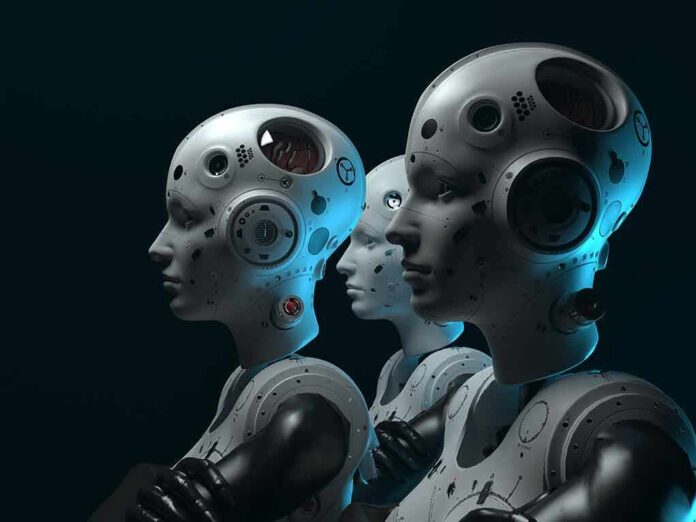
The gap between a robot that can charm a crowd in a city park and a robot that can safely watch your children unsupervised is not a matter of degree — it is a matter of kind, and nearly every humanoid robotics program now racing toward consumer markets is still stranded on the wrong side of that gap.
Key Points
- A life-sized, AI-powered humanoid robot built by Faraday Future appeared at Brooklyn Bridge Park on October 25, 2026, singing, dancing, and mingling with visitors.
- Chief Technology Officer Hong Rao operated and chaperoned the $89,000 machine, which the company says is in active learning and development, not a finished product.
- The stated long-term goal is caregiving: the robot is meant to eventually function as a babysitter, teacher, or companion.
- Industry-wide, “autonomous” humanoid demonstrations frequently lean on teleoperation, scripted conditions, and controlled environments — a pattern worth understanding before any capability claim is taken at face value.
- Academic research on social robots and children consistently flags unresolved privacy, safeguarding, and evidentiary gaps that precede any responsible deployment in caregiving roles.
A Humanoid Debut in Brooklyn Bridge Park
On a Sunday afternoon in late October, parkgoers at Brooklyn Bridge Park encountered something that doesn’t belong in a routine stroll along the East River: a life-sized humanoid robot moving among them, singing to children and dancing with adults who stopped to watch. The New York Post reported that the machine was developed by Faraday Future, the California-based electric vehicle company, and that it was accompanied in the park by Hong Rao, the company’s chief technology officer, who served as its operator and chaperone. The $89,000 price tag, confirmed across multiple outlets covering the appearance, situates the robot well below the seven-figure sums associated with some industrial humanoid platforms, but still far beyond anything resembling a consumer toy.
What makes this debut notable isn’t the novelty of a robot in public — that threshold was crossed years ago — but the stated purpose behind the outing. According to the company’s own framing, the robot was not there to perform a fixed routine. It was there to collect real-world interaction data, the raw material it needs to refine how it reads human behavior and responds to it. That framing matters because it reclassifies the park visit from spectacle to data-gathering exercise, with implications for how the public should weigh what they saw.
From Street Performance to Caregiving Ambition
Faraday Future’s stated ambition for this machine extends well past entertainment. The company has described the robot as still in the learning and development stage, relying on human interaction and unscripted real-world experience to sharpen its intelligence, with an eventual goal of functioning as a babysitter, teacher, or companion. That is a significant leap in responsibility — from dancing with strangers in a park to being trusted, unsupervised, with the physical and emotional welfare of a child. No credible robotics program reaches that threshold through a single afternoon of public exposure, and nothing in the reporting suggests Faraday Future claims otherwise; the company’s own language treats the Brooklyn Bridge Park appearance as an early data-collection milestone, not a finished capability.
The ambition itself is not unusual. Caregiving and companionship have been the holy grail of social robotics for over a decade, chased by platforms ranging from SoftBank’s Pepper to a long list of kindergarten-classroom experiments. What distinguishes a serious caregiving system from a charming demo is the depth of validated, repeatable capability behind it — perception that holds up outside curated settings, judgment that generalizes beyond the scenarios it was trained on, and safety margins that don’t depend on a human quietly managing the machine from just out of frame.
How Humanoid Robots Actually Learn to Act Human
Here lies the central mechanical reality of this entire category: most of what the public sees from humanoid robots today is a blend of genuine autonomy and human assistance, and the two are rarely disclosed in equal measure. Analysts tracking the broader humanoid field have found that demonstrations billed as autonomous frequently depend on teleoperation — a human operator guiding the machine’s movements or decisions from off-camera — alongside scripted tasks and environments chosen specifically because the robot performs well in them. Robotics experts examining the current wave of viral humanoid footage have reached the same conclusion: accelerated playback, controlled settings, and operator intervention routinely narrow the distance between what a robot appears to do and what it can reliably do on its own. None of this makes a public appearance deceptive. It does mean that a single outing — however charming — establishes that a robot can produce an engaging interaction, not that it has achieved the generalized judgment caregiving requires.
Faraday Future’s own description of the robot as a work in progress, actively gathering data rather than demonstrating a finished skill, is consistent with this pattern rather than an exception to it. The company has been transparent that the machine is still learning; the open question, as with every humanoid caregiving project before it, is how long the distance is between today’s park appearance and a product trustworthy enough to leave alone with a child.
Why Child-Facing Robots Carry a Higher Bar
Caregiving robotics researchers have spent years mapping exactly why that distance matters so much when children are involved. Academic reviews of social robots designed for childcare and education consistently conclude that any autonomous behavior around children should remain strictly supplemental to human supervision, not a replacement for it, and that affective computing and perceptual reliability still require substantially more research before unsupervised roles become acceptable. Separate reviews of manufacturer claims about child-directed social robots have found that commercial marketing routinely outpaces the scientific evidence behind it, with companies describing capabilities their published research does not yet substantiate. Researchers studying robot deployment in educational settings have also flagged a persistent governance vacuum: there are still no clear, widely adopted guidelines for how children’s data, trust, and emotional attachment to a robot should be protected.
What the Park Appearance Does and Doesn’t Prove
Taken on its own terms, the Brooklyn Bridge Park debut proves something real: Faraday Future has built a humanoid platform capable of operating in an uncontrolled public space, drawing a crowd, and executing socially legible behaviors like singing and dancing without incident. That is a meaningful engineering milestone, and it is the kind of unscripted environment many humanoid programs avoid precisely because it exposes weaknesses that a trade-show stage conceals. It does not, on its own, establish that the underlying AI has developed the judgment, safety guarantees, or emotional calibration that caregiving demands — and the company’s own characterization of the robot as still learning acknowledges exactly that. The babysitter ambition is the headline that will follow this robot for years; the park walk was the first recorded step toward it, nothing more and nothing less.
Sources:
nypost.com, ny.com, scazlab.yale.edu, jaredwatkins.com, link.springer.com, robots.law.miami.edu
© featurednews.com 2026. All rights reserved.