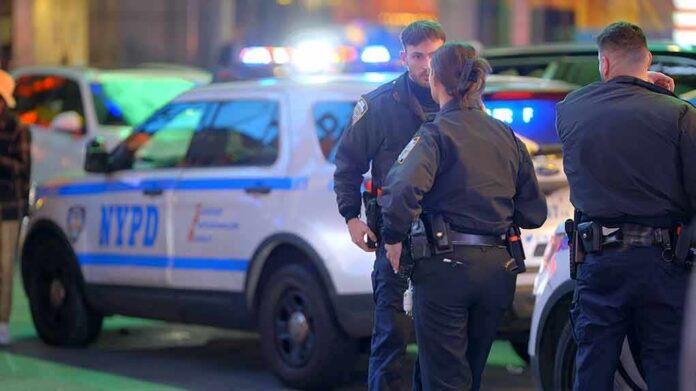
When cities rewire how they police protests and prevent terrorism, the real question isn’t whether headcount moves on an org chart—it’s whether capability, command clarity, and public legitimacy survive the change. New York’s decision to disband the NYPD’s Strategic Response Group (SRG) forces that question into the open.
The Short Version
- SRG’s broad mission set—protests, major events, citywide mobilizations, and counterterrorism—has been split across new civilian-led and police units.
- Counterterrorism functions, including heavy-weapons protections for critical infrastructure, shift to the NYPD Intelligence and Counterterrorism Bureau.
- Protest response pivots to dialogue and de-escalation via a civilian division paired with an NYPD First Amendment Support Team; the division has no weapons or arrest powers.
- Supporters say separating missions protects constitutional speech without weakening security; critics warn about coordination gaps and the loss of an integrated rapid-response force.
What SRG Was Designed To Do—and Why That Matters
SRG was built as a citywide, mobile capability: trained officers, specialized equipment, and the authority to surge where risks were highest. The NYPD’s own description paired “citywide mobilizations, civil disorders, and major events” with deployments to hotspots and, critically, counterterrorism roles that included armed protection of critical infrastructure. That blend gave commanders one switch to flip when protests swelled beyond plan, a stadium celebration spilled into the streets, or intelligence flagged a threat. Whatever you think of its protest tactics, SRG’s core value proposition was integration: one unit trained to move, coordinate, and scale under unified command.
Integration is not romantic; it is logistical. It shortens the path from detection to deployment, with habitual relationships across radio channels, incident command posts, and staging. When a mayor or chief says “we need bodies and barriers on Sixth and a weapons team on the bridge,” a single enterprise can answer both. In complex urban operations—where a demonstration, an opportunistic criminal element, and a lone-wolf threat can overlap in the same hour—those seams matter.
What Changes Under the New Structure
City Hall’s plan disbands SRG and separates its two most controversial functions. Counterterrorism, including heavy-weapons details at key sites, is consolidated under the Intelligence and Counterterrorism Bureau—an existing structure with analytical depth and specialized training. Protest response moves in the opposite direction: a civilian-led Community Dialogue and De-escalation Division will lead engagement, with no weapons or arrest powers, and it will be paired with an NYPD First Amendment Support Team (FAST) to prepare for and respond to demonstrations. The reform package also restricts tools such as tear gas, pepper spray, long guns, and kettling at First Amendment events.
Supporters frame this as a principle-of-mission separation: protesters exercising constitutional rights should not face a posture designed for terrorism, and counterterrorism should be housed where intelligence and specialized threat mitigation live. Commissioner Jessica Tisch has said New Yorkers will see no change in crowd-control at large celebratory events—suggesting that core mass-gathering competencies remain within patrol and event units while protest-specific engagement shifts to dialogue-first teams.
The Capability Question: Capacity, Speed, and Command
The strongest argument for concern is not about headcount; it’s about seams. Moving the heavy-weapon and critical-infrastructure function to Intelligence and Counterterrorism preserves an essential capability on paper, but the burden shifts to inter-bureau choreography under stress: shared training evolutions, common communications plans, and pre-scripted mobilization tables that guarantee the right teams appear in the right order with the right authorities. If that choreography exists and is rehearsed, the city can match SRG’s counterterrorism readiness; if it does not, response velocity and cohesion degrade, sometimes imperceptibly—until they don’t.
On the protest side, the pivot to dialogue-first is grounded in research and comparative practice. Dialogue policing—trained officers or civilian intermediaries who build channels with organizers, share expectations, and problem-solve friction points—has reduced force, arrests, and injuries in multiple U.S. and European contexts when properly integrated with command and contingency plans. Scholars emphasize that most protests are peaceful; preparation, communication, and perceived legitimacy shape outcomes more than sheer toolkits do. A civilian-led division could, in theory, deepen trust and improve information flow before and during events—provided it has clear escalation pathways and embedded liaisons to sworn units when conditions change.
Where Critics Have a Point—and Where They Don’t
Critics warn that replacing a trained, armed protest response with unarmed civilians and a liaison team invites risk if a demonstration rapidly turns violent. They highlight vivid hypotheticals and point to real-world scares—such as the March incident near Gracie Mansion, where two ISIS supporters allegedly attempted to detonate pipe bombs during a protest—as proof that events can flip from speech to threat in seconds. The logic that dialogue teams cannot neutralize explosives is obvious; the harder question is whether the new structure degrades the speed with which armed, trained police arrive and take command. The available public record does not show that SRG’s presence was decisive in that specific case or that the successor configuration would have failed; the incident functions here as a stress-test scenario, not a refutation.
On the other side, City Hall’s assurances are concrete where it matters most: counterterrorism duties, including heavy-weapons deployments to protect critical infrastructure, remain an NYPD function within an established bureau; approximately 500 SRG officers are being reassigned, not lost; and the department asserts that major-event crowd control remains intact. Those claims undercut any narrative of a defunding or wholesale loss of capacity. The unresolved variable is integration: will intelligence, patrol, counterterrorism, and protest-liaison elements train together and mobilize as seamlessly as a single SRG did at its best?
Wow!
"On Monday, New York City Mayor Zohran Mamdani announced he is shutting down what is known as the NYPD’s Strategic Response Group.
It is a roughly 500-officer unit that the city has sent to protests for years, and it will be gone by spring. In a video, Mamdani stated:…
— Lorraine Evanoff (@LorraineEvanoff) November 19, 2026
What Success Requires Now
New York can reconcile legitimacy with capability if it treats this as a systems-engineering problem with public consequences. Four design choices determine whether the reform works:
First, codified incident command and mobilization triggers. FAST, the civilian division, patrol, and Counterterrorism must share a single playbook: common radio nets, staging locations, supervisor roles, and pre-authorization thresholds for escalation. Ambiguity in who calls for which asset at what trigger is the enemy of speed.
Second, joint training and exercises. Tabletop rehearsals and live simulations that pair dialogue teams with patrol, bicycle units, arrest teams, and counterterrorism assets teach escalation choreography before a real crowd does. If the first time partners meet is on a contested street, you have already chosen friction.
Third, capacity for concurrency. New York rarely has one event at a time. The city should publish, at least to oversight bodies, the maximum number of simultaneous demonstrations and major events the new model can support with dedicated liaison, arrest, and counterterrorism teams on standby.
Fourth, measurement and transparency. The reform will rise or fall on outcomes: injuries (civilian and officer), property damage, arrests, deployment times for specialized assets, uses of force, and time-to-resolution—benchmarked against comparable events under SRG. Independent analysis can separate signal from ideology and test whether restrictions on tear gas, pepper spray, long guns, and kettling correlate with better or worse safety outcomes when controlling for event size and threat profile.
How to Read the Tradeoff
Protest policing is an arena where values and tactics collide. Dialogue-forward models can build legitimacy and improve intelligence during fluid events, and the empirical record supports that claim when the approach is resourced and integrated with clear escalation lanes. Consolidating counterterrorism inside an intelligence-centric bureau is also logically coherent—many large agencies separate community-facing crowd management from specialized threat interdiction. The risk lies not in either concept alone but in the seam between them. If the seam is narrow, rehearsed, and commanded, New York can keep both liberty and safety. If it widens in practice, the city will pay in minutes when minutes matter.
Sources:
facebook.com, cbsnews.com, amny.com, nbcnews.com, hidabroot.com, mlq.ai, arcamax.com, cnycentral.com, brooklyn.news12.com, lemonde.fr
© featurednews.com 2026. All rights reserved.