When a preventable death exposes two failures at once—impaired driving and a person behind the wheel who should not have been on the road or in the country—the public outrage is not about abstraction; it is about systems that did not do the minimum to keep people safe.
The Short Version
- Ohio authorities charged Alvaro Uribe-Gonzalez with aggravated vehicular homicide, DUI, and driving without a valid license after a crash that killed 23-year-old teacher Cameron Lyon and seriously injured his fiancée.
- U.S. Immigration and Customs Enforcement (ICE) lodged a detainer, identifying Uribe-Gonzalez as unlawfully present; local officials publicly linked the case to illegal status and lack of licensure.
- The core public-safety failures are impairment and unlicensed driving; immigration status makes the case an enforcement test as much as a traffic tragedy.
- Evidence from multiple states shows licensing policy can affect hit-and-run behavior without changing fatality rates; arguments now center on custody coordination and release decisions.
What Happened: The Fatal Crash and the Charges
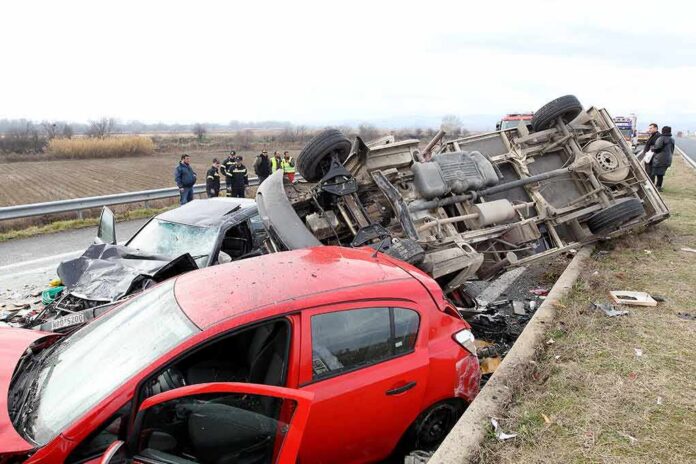
On a September evening in Fairfield County, Ohio, a two-vehicle collision on the U.S. 33 corridor left Cameron Lyon—a 23-year-old social studies teacher—dead and his fiancée gravely injured. Local reporting, citing the Ohio State Highway Patrol and county officials, states the suspect, 33-year-old Alvaro Uribe-Gonzalez, crossed into opposing lanes and struck Lyon’s SUV; alcohol and the absence of a valid driver’s license are central allegations. He was booked on aggravated vehicular homicide and related offenses and held in the county jail. The school district and community announced Lyon’s death and memorialized him as a promising educator, underscoring the human loss behind the case.
Within days, the Department of Homeland Security confirmed that U.S. Immigration and Customs Enforcement lodged an immigration detainer with Ohio authorities identifying Uribe-Gonzalez as an illegal alien from Mexico; the request asks that local custody not be terminated without notifying ICE so the agency can assume custody after the state case proceeds. Fairfield County officials and regional outlets reported the same core facts: no license, DUI allegation, and unlawful presence tied to an ICE hold.
Mechanism of Failure: Impairment, Unlicensed Driving, and Custody Gaps
This tragedy is, first, a roadway-safety failure. Alcohol impairment reliably multiplies crash risk by degrading reaction time, executive function, and lane-keeping. When the driver is also unlicensed, two safeguards—sobriety and state vetting—have failed. The legal system recognizes this interaction in how aggravated vehicular homicide statutes are often charged: impairment plus a prohibited status behind the wheel. The second failure is custodial: when a person whom federal authorities deem removable remains in the community despite prior flags, any subsequent violent or fatal offense becomes a referendum on interagency coordination.
ICE detainers are not criminal warrants; they are civil requests that hinge on local cooperation. Where jails honor them, deportable individuals often move directly from state custody to federal custody after adjudication. Where jurisdictions decline, release decisions can create gaps—sometimes measured in hours—during which a person can abscond. In Ohio, cooperation varies by county; in this case, DHS says the detainer is in place and seeks transfer post-prosecution. These mechanics are dry, but they are dispositive: whether a dangerous driver is lawfully removed or released turns on these handoffs.
Why This Case Became an Immigration Flashpoint
Crashes involving undocumented or otherwise unlicensed drivers routinely serve as proxies for larger immigration policy fights. The pattern is well documented: media treatments of immigration and crime disproportionately present immigrants as crime-prone, even when the proximate cause is behavior—like impaired driving—that cuts across nativity and legal status. That tendency does not absolve individuals or erase enforcement stakes; it does clarify what the data can and cannot say. If the objective is to reduce fatal crashes, we have to measure what interventions change driving behavior rather than assume immigration status alone is causal.
On that point, the empirical record is mixed in ways that matter for policy design. Studies assessing states that granted driver’s licenses to undocumented immigrants generally find no increase in fatal crashes attributable to the licensing reform itself; several identify a reduction in hit-and-run fatalities, suggesting that when drivers are licensed and insured, they are less likely to flee after a collision. These findings coexist with older analyses showing unlicensed drivers—regardless of immigration status—are several times more likely to cause fatal crashes than licensed drivers, reflecting risk concentrated in unlicensed operation rather than nationality.
Enforcement, Not Abstraction: What Authorities Did Here
In Ohio, the post-crash enforcement picture is concrete. The charging instruments focus on impairment and unlawful operation of a vehicle. ICE’s detainer sets a custody pathway if and when local proceedings conclude. The point is not theoretical deterrence; it is immediate incapacitation and adjudication. Detainers are meant to prevent a release into the community without federal notice, and DHS’s public statement is a signal that, at minimum, the coordination switch is on in this case. For communities, that is the baseline expectation: prosecute the homicide, hold the driver accountable under state law, and, if convicted, transfer to federal custody for removal proceedings rather than allow a discretionary street release.
In public discourse, two unhelpful shortcuts often appear. One is the claim that immigration per se drives higher DUI fatality risk; national-level analyses do not find a reliable relationship between higher illegal-immigrant population shares and drunk-driving deaths. The other is the inverse, that immigration policy is irrelevant to roadway safety; it is not. When a person with no legal right to remain, no valid license, and an alleged blood-alcohol violation kills someone, the only responsible policy discussion is about the seams—license enforcement, alcohol deterrence, and custody handoffs—that could have narrowed the window for harm.
The Practical Reform Questions This Case Puts On the Table
First, licensing and insurance compliance: States that channel drivers into licensing—paired with proof-of-insurance requirements and strong DUI enforcement—tend to reduce hit-and-runs without increasing fatalities, which matters for victim survival and swift accountability. Second, pretrial detention standards for aggravated vehicular homicide with DUI should be calibrated to actual flight and public-safety risk; courts and prosecutors in many jurisdictions already treat such cases as presumptively non-bond or high-bond. Third, detainer process integrity: whether a jail honors an ICE request should not hinge on ad hoc phone calls. Clear state-level MOUs, timestamped notifications, and chain-of-custody protocols reduce the chance that a defendant subject to removal vanishes between court dates.
None of these reforms require grandstanding. They require administrative competence and an adult understanding of incentives: drivers—even undocumented drivers—respond to enforcement clarity around DUI, to the availability of lawful licensing channels where states permit them, and to the certainty that custody transfers will occur when courts say they will. Victims’ families are not asking for social-science lectures; they are asking for systems that function so the next family never learns the vocabulary of detainers and aggravated vehicular homicide in a hospital hallway.
Deported illegal alien accused of killing engaged Ohio teacher in DUI crash | Fox News https://t.co/4QvNgfwCPH
— DocSon HQ (@MrDocSon) September 10, 2026
The Stakes, Measured in Outcomes
The measure of a serious policy response to a case like Cameron Lyon’s is not the speed of the press conference; it is whether the next intoxicated, unlicensed, removable driver is incapacitated before a fatal crash occurs, and whether, when the worst does happen, the handoff from local jail to federal custody is automatic, recorded, and complete. The established facts here are clear: a young teacher is dead; a fiancée is injured; the driver stands charged with the most serious traffic homicide offenses Ohio law allows; and ICE has positioned to take custody afterward. The right debate is about closing the seams that let impairment and unlawful operation intersect with avoidable access to the road.
Sources:
foxnews.com, dhs.gov, us.headtopics.com, jurelist.com, dailysignal.com, abc6onyourside.com, youtube.com, x.com, ojjpac.org
© featurednews.com 2026. All rights reserved.