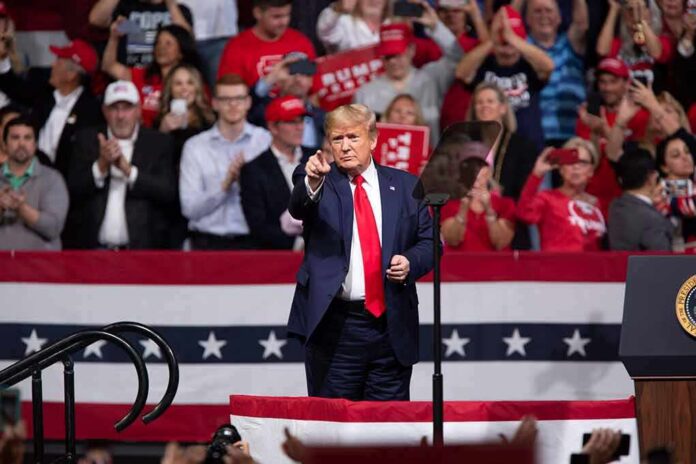
Ross Ulbricht’s onstage thanks to President Trump was more than personal gratitude; it crystallized a long‑running argument about clemency, technology, and justice—whether an executive pardon can simultaneously vindicate liberty and strengthen security, rather than trade one against the other.
The Short Version
- President Trump granted Ross Ulbricht a full and unconditional pardon; the Justice Department’s warrant confirms it, and Trump publicly announced the decision.
- Ulbricht, freed after more than a decade behind bars, publicly thanked Trump and cast liberty and security as mutually reinforcing rather than zero‑sum.
- The case sits squarely in a modern pattern: presidents wield clemency amid ideological, electoral, and coalition incentives—not only as individualized mercy.
- A full pardon erases the conviction but does not automatically undo asset forfeitures or entitle the recipient to reclaimed cryptocurrency under current law.
What actually happened: the pardon, the speech, and the message
President Trump issued Ross Ulbricht a full and unconditional pardon for his federal convictions arising from the Silk Road marketplace, as memorialized in a signed warrant from the Department of Justice. Trump also affirmed the decision publicly, describing his notification to Ulbricht’s mother and crediting political supporters who had pressed his campaign on the case. In subsequent appearances and a video message, Ulbricht expressed gratitude, emphasizing that after serving more than 11 years of a life‑without‑parole sentence, he was now free—and he explicitly framed liberty and security as compatible values rather than antagonists.
That framing matters. For a decade, debate over Silk Road often reduced to a binary: maximal digital freedom versus public safety. Ulbricht, newly pardoned, rejected that dichotomy from the stage, arguing that durable security is built atop consensual norms, rule‑constrained state power, and room for experimentation—ideas that have animated civil‑libertarian critiques of drug prohibition and certain cyber enforcement tactics since the 1990s. Whether one agrees or not, the speech placed the pardon within a larger philosophy rather than treating it as a one‑off political gift.
How presidential clemency works—and why this case fits a recognizable pattern
The Constitution’s pardon clause gives presidents broad authority to remit punishment for federal offenses. In practice, clemency has always braided together law, ethics, and politics: presidents balance case merits with the optics and coalition management that define executive leadership. Political scientists have documented that clemency decisions track a president’s agenda and ideology, and that partisan differences in targets and timing are measurable rather than incidental. Economic and institutional analyses likewise model pardons as choices shaped by perceived costs and benefits within a president’s governing environment.
That literature helps decode the Ulbricht decision. Trump previewed clemency to Libertarian audiences during the campaign cycle, tying the move to a broader pitch about criminal justice fairness and overpunishment in nonviolent drug contexts. Seen through the research lens, the pardon advanced multiple objectives at once: it resonated with constituencies skeptical of the drug war, showcased executive independence from prosecutorial severity, and symbolically embraced a strain of internet‑era liberty politics. Recent scholarship argues that modern presidents increasingly deploy clemency to serve political and personal goals alongside, and sometimes ahead of, traditional mercy rationales—a trend visible in both Trump and Biden years.
Liberty and security: the substantive disagreement, not the slogan
Ulbricht’s “liberty and security go together” line rests on a long argument in political theory and policing practice: that predictable law, due process, and proportionate punishment produce more compliance and less black‑market violence than sweeping prohibitions enforced with maximal penalties. Advocates point to the distortions created when high‑demand markets are pushed underground, where quality control disappears and disputes migrate from courts to coercion. Critics respond that darknet platforms can supercharge illicit trade, anonymize predators, and erode public health, requiring strong deterrence.
Empirically, both claims contain truths and boundary conditions. Digital intermediaries can dampen some street‑level violence by replacing physical exchange with escrow and shipping; they can also widen access, boost potency, and complicate interdiction. The policy question is not whether freedom or safety “wins,” but which institutional arrangements—statutes, sentencing ranges, and technological guardrails—produce the best composite of autonomy and harm reduction. The Ulbricht pardon does not settle that debate; it reopens it, now with a marquee figure arguing that the prior equilibrium overshot.
What a full pardon does—and what it does not
A full and unconditional pardon eliminates the legal consequences of the conviction itself; it is more sweeping than a commutation, which only shortens or ends a sentence. The practical aftermath, however, is more nuanced. Collateral civil liabilities and completed forfeitures are not automatically unwound because a pardon issues after final judgment. Modern courts have largely abandoned the old common‑law fiction that a pardon “blots out” the offense in every respect; as applied to forfeited cryptocurrency associated with Silk Road, analysts have been clear that reclaiming assets remains unlikely under current law.
That distinction is central to understanding post‑pardon life. Ulbricht is free and his conviction vacated by executive act, but the economic and reputational terrain is stickier. Travel and licensing barriers often ease; restitution orders, third‑party rights, and prior administrative consequences can persist unless separately addressed. This is why clemency recipients and their counsel frequently pursue a second phase of relief—administrative remedies or legislative pathways—to align residual penalties with the spirit of mercy that justified the pardon.
Why this matters beyond one man’s case
First, the decision reasserts that the presidency retains a robust, individualized safety valve over the federal carceral state. Whether one is wary of that discretion or grateful for it, the power exists, and contemporary presidents use it with increasing ideological clarity. Second, it spotlights how digital‑age offenses scramble legacy sentencing frameworks. Life without parole for a first‑time, nonviolent offender, however sophisticated the conduct, reads to many as disproportional; others see it as proportionate to the scale and social cost of the enterprise. The pardon effectively sided with the former camp while leaving Congress and the Sentencing Commission to reconcile policy for the next case.
Third, it reframes the liberty–security debate for the internet generation. The old tradeoff model—more of one means less of the other—fares poorly in complex systems where opacity breeds exploitation and legitimacy breeds cooperation. If security is not merely the absence of crime but the presence of trust, then lawful avenues, transparent rules, and calibrated sanctions can produce more safety than blanket prohibitions. Ulbricht’s rhetoric pushes that thesis back into mainstream contention, where it belongs to be tested, refined, or rebutted by evidence and law.
LIVE UPDATES: Silk Road Founder Ross Ulbricht sang Trump’s praises in his RNC convention speech. Ulbricht was sentenced to life in prison over his alleged founding of the Silk Road dark web drug market before he was pardoned by Trump.
MORE: https://t.co/UkyW5ucyTn
— Washington Examiner (@dcexaminer) September 11, 2026
The road ahead: policy, precedent, and practice
Expect three fronts of activity. On policy, reformers will leverage the pardon to press for narrower statutes and recalibrated drug and cyber‑crime sentencing. On precedent, future clemency petitions from technologists and platform operators will cite the Ulbricht case as a template for mercy when punishment outruns culpability. And in practice, prosecutors and regulators will continue targeting the financial and infrastructural links that enable illicit markets, while courts sort out the durable limits of forfeiture and post‑pardon relief. However one reads the pardon’s motives, it returns a hard question to first principles: what mix of liberty and enforcement actually secures a free society in a networked age?
Sources:
youtube.com, fox5ny.com, washingtonexaminer.com, cnn.com, kcra.com, theamericanconservative.com, cnbc.com, en.wikipedia.org
© featurednews.com 2026. All rights reserved.