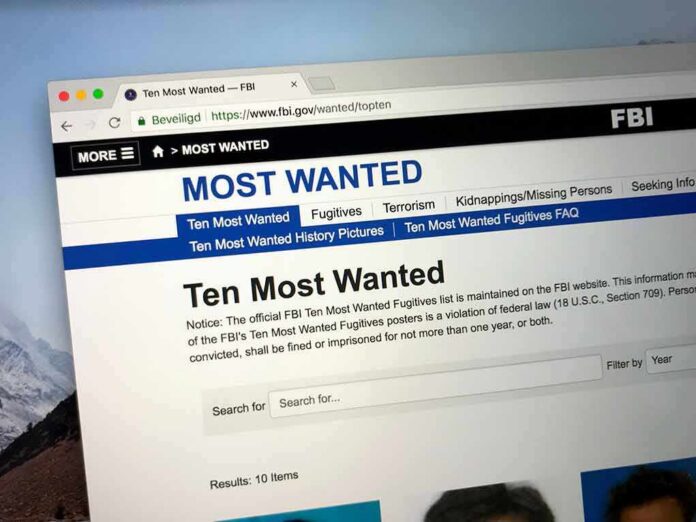
When the FBI says it made nearly 9,000 arrests and located 1,410 child victims in a single summer, the headline number matters less than the machine behind it — and that machine, which has run versions of this surge for years, reveals as much about how federal law enforcement counts success as it does about the crimes themselves.
Key Points
- FBI Director Kash Patel announced that Operation Summer Heat 2.0, run June 1 through August 31, 2026, produced roughly 8,900 arrests, 5,000 firearms seizures, more than 1,400 child victims located, and 2,700 federal indictments nationwide.
- The FBI’s New Orleans field office and the DEA jointly confirmed concrete Louisiana results — 662 arrests, 315 firearms, 207 kilograms of narcotics, and $325,853 in cash — the clearest documented slice of the national total.
- A parallel fugitive sweep in Maryland and Delaware yielded 109 arrests on charges including rape, child sexual exploitation, and abuse of a minor.
- The operation relied on an unusual deputization push, cross-designating more than 180 state and local officers with federal arrest authority under Titles 18 and 21.
- National arrest figures of this kind are, by the FBI’s own longstanding practice, aggregated estimates built from participating agencies’ submissions — a structure that explains the local-to-national reporting gap without undermining the underlying enforcement activity.
What Was Announced, and By Whom
The headline figures trace to public remarks by FBI Director Kash Patel in the final days of September 2026, crediting Operation Summer Heat 2.0 with roughly 8,900 arrests, 5,000 firearms seizures, more than 1,400 child victims located or identified, 2,700 federal indictments, and substantial narcotics seizures nationwide. The operation itself ran from June 1 through August 31, 2026, a 92-day window that mirrors the first Summer Heat initiative from the previous year and signals that this has become an annual, deliberately scheduled federal campaign rather than a one-off response to a news cycle.
The most granular confirmation of that national figure comes from Louisiana, where the FBI’s New Orleans field office and the DEA jointly announced results on September 14, 2026. There, more than two dozen local, state, and federal agencies coordinated under FBI Special Agent in Charge Jonathan Tapp, U.S. Attorney Kurt Wall, Louisiana Attorney General Liz Murrill, ATF Special Agent in Charge Joshua Jackson, and DEA Special Agent in Charge John Scott. The Louisiana tally alone — 662 arrests on more than 1,000 state and federal charges, 315 firearms including six illegal automatic-conversion switches, 207 kilograms of narcotics, and $325,853 in drug cash — gives the national number real texture rather than leaving it as an abstraction.
How the Operation Actually Worked on the Ground
Summer Heat 2.0’s distinguishing feature wasn’t just scale; it was jurisdictional reach. FBI leadership deputized more than 180 officers statewide in Louisiana, including the entirety of Louisiana State Police Troop NOLA, granting them federal arrest powers under Titles 18 and 21 of the U.S. Code. U.S. Attorney David Courcelle called the arrangement an “incredible force multiplier,” and the description fits: it let federal prosecutors reach state-level arrests that would otherwise have stalled in local courts, while state officers gained access to federal sentencing exposure that SAC Tapp argued was the only real deterrent, noting that “incarcerating a dangerous criminal for one night or even a few hours is 100% ineffective at maintaining public safety.”
In New Orleans proper, agents made 532 arrests with 224 firearms and 137 kilograms of drugs seized. Baton Rouge operations concentrated on two historically high-crime neighborhoods, the Bottoms and Brookstown, netting 95 arrests, 76 firearms, nearly 54 kilograms of drugs, and $270,739 in cash — including the arrest of Ronrico Terrell, a 50-year-old with three decades of drug arrests who was on federal probation at the time. North Louisiana, often overlooked in federal trafficking enforcement, still produced 35 arrests and 15 kilograms of seized narcotics. A separate Maryland and Delaware fugitive sweep tied to the broader Summer Heat umbrella produced 109 arrests on charges spanning rape, child sexual exploitation, and abuse of a minor.
Why the National Total Is Harder to Audit Than the Local Ones
Here is where an informed reader should slow down, not out of doubt about whether the operation happened, but to understand how federal crime statistics are built in general. The FBI has for decades described its national arrest totals not as a complete ledger but as an estimate: when participating agencies submit fewer than twelve months of data, the Bureau applies a standard estimation procedure to fill the gap, and it has said so explicitly in its own Uniform Crime Reporting methodology documentation. That is not a flaw unique to Summer Heat 2.0 — it is how virtually every national arrest figure the federal government publishes has worked since the modern UCR program began, because thousands of agencies report on different schedules and in different formats.
That structural reality explains why Louisiana’s 662 arrests and Maryland’s 109 arrests can be fully documented at the press-release level while the nationwide 8,900 figure arrives as a composite announced by the Director rather than a single downloadable dataset. It does not mean the number is wrong; it means the number is built the way federal arrest statistics have always been built — aggregated from dozens of field offices and partner agencies, each reporting its own slice. The same applies to the child-victim count: a figure like 1,410 almost certainly blends children recovered during fugitive sweeps, children identified in ongoing exploitation investigations, and children referred to protective services, categories that federal law enforcement does not always disaggregate in a single public announcement.
BREAKING: Operation Summer Heat 2.0 led to 8,900+ arrests and 1,410 child victims found by the FBI.
— Gokhshtein (@gokhshtein) October 3, 2026
What This Means for How the Public Should Read These Announcements
Operation Summer Heat 2.0 sits inside a recognizable pattern of federal enforcement surges — the U.S. Marshals Service has run comparable warrant-clearance operations in major metropolitan areas, and the FBI’s own first Summer Heat initiative the prior year followed the identical logic of a defined summer window followed by a late-year results announcement. The documented local results from Louisiana and the Mid-Atlantic corroborate that real arrests, real seizures, and real children were part of this campaign; the national aggregate simply reflects how that local work gets rolled up into a single bureau-wide figure. For anyone tracking federal crime policy going forward, the useful habit is not suspicion of the headline number but attention to the field-office detail behind it — because that detail, as Louisiana shows, is where the operation’s actual record lives.
Sources:
zerohedge.com, dea.gov, wafb.com, breitbart.com, cmsapi.theepochtimes.com, fbi.gov, wbaltv.com, theepochtimes.com, flvoicenews.com, southernmarylandchronicle.com, signalscv.com
© featurednews.com 2026. All rights reserved.