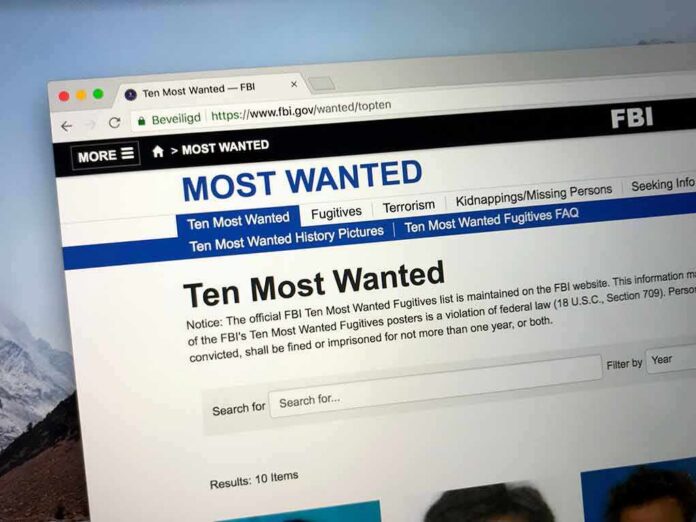
When the FBI moves a fugitive onto its Ten Most Wanted list and hangs a seven-figure reward beside the name, it is not just chasing a suspect; it is mobilizing a proven public-intelligence machine built to compress manhunts from years into months by turning millions of eyes and ears into sensors.
At a Glance
- The FBI added Satinderjeet “Goldy” Brar to the Ten Most Wanted Fugitives list and posted a reward of up to $1 million for information leading to his arrest.
- Federal charges out of Los Angeles allege racketeering conspiracy, extortion-related offenses, and narcotics-trafficking conspiracies tied to a transnational gang network.
- The Ten Most Wanted program is a 1950-era publicity engine designed to elicit tips; hundreds of fugitives have been captured with public help.
- High-dollar rewards are both signal and sorting tool: they widen the tip net, even as researchers debate how much bounties alone change outcomes.
What the FBI did and why it matters
The FBI’s Los Angeles Field Office announced that Satinderjeet Singh, known as Goldy Brar, has been placed on the Bureau’s list of Ten Most Wanted Fugitives, with a reward of up to $1 million for information leading to his capture. The notice anchors Brar’s fugitive status to federal charges in the Central District of California, including racketeer influenced and corrupt organizations (RICO) conspiracy, conspiracy to interfere with commerce by extortion, and conspiracy to distribute and possess with intent to distribute controlled substances—offenses prosecutors associate with a transnational organized-crime network operating across the United States and Canada. The Bureau uses this designation sparingly; adding a name to the list is a public prioritization that enlists the public as force multiplier.
The price tag is also a signal. In recent years, the FBI increased standard Ten Most Wanted rewards from up to $100,000 to up to $250,000, with select cases scaling higher when the fugitive’s threat profile and investigative need warrant it. A $1 million ceiling puts this case at the upper end of the Bureau’s reward architecture and communicates confidence that public leads—credible sightings, digital traces, social or financial connections—could pressure an arrest. The tactic aligns with the program’s DNA: it is a publicity platform designed to generate quality tips, not a legal status conferring guilt; the underlying charges and warrants do that work.
How the Ten Most Wanted program works
Launched in 1950 after a media request that morphed into a Bureau-run campaign, the Ten Most Wanted list has always been a communications instrument wrapped around manhunts: crisp photos, identifying data, and a narrative of danger and urgency pushed into newspapers, television, now web and social feeds. The mechanism is simple and effective when properly aimed—publicize a dangerous fugitive, make it easy to submit tips, and offer a tangible incentive to overcome fear or apathy. Over decades, hundreds of fugitives have been apprehended or located after appearing on the list; the FBI frames the program as a persistent success story in public-safety marketing coupled to investigative follow-through.
Rewards are integral but not talismanic. Criminologists and practitioners have long debated whether large bounties materially increase the odds of capture or merely increase call volume and investigative triage. Some analyses argue that rewards, especially big round numbers attached to high-profile targets, are more about signaling and sorting—pulling unknown informants out of the woodwork, giving fence-sitters a reason to talk—than about flipping a single decisive source. The Bureau’s own evolution suggests a blended lesson: maintain the publicity engine, escalate rewards in cases where public reach matters most, and invest in the backend so agents can sift noise from signal quickly.
The charges: what “RICO conspiracy” means in practice
RICO—Congress’s principal anti-racketeering statute—targets patterns of criminal activity conducted through an “enterprise,” a term that captures formal organizations and looser criminal associations. A RICO conspiracy charge, such as the one the FBI cites here, alleges an agreement to conduct or participate in the conduct of that enterprise’s affairs through a pattern of specified crimes—extortion, drug trafficking, violence—rather than a single isolated event. Prosecutors use RICO to address the ongoing structure and methods of a criminal group, to reach leaders and coordinators as well as direct perpetrators, and to enable forfeiture of enterprise assets. Pairing RICO conspiracy with extortion and narcotics conspiracies, as alleged in the Los Angeles charging documents, sketches a familiar structure: a crew that uses violence and fear to extract money and territory, and a logistics arm that moves drugs for revenue and leverage.
In transnational cases, RICO’s utility is magnified. It allows U.S. authorities to connect offenses that cross borders—planning in one country, a violent act in another, proceeds laundered through a third—so long as the enterprise’s conduct and effects tie back to U.S. jurisdiction. That jurisdictional hook, once established, opens channels for mutual legal assistance, extradition requests, and joint operations with foreign law enforcement, while the reward campaign seeks the human tip that often cracks a fugitive’s operational security.
Why the Bureau leans on the public—and what actually moves the needle
Publicity changes the fugitive’s risk calculus. A face on airport screens and news sites raises the cost of travel, safe housing, and routine commerce; associates become liabilities; routine contacts risk becoming paid informants. The FBI emphasizes that the Ten Most Wanted is, by design, a public-awareness program; it exists to convert passive observers into active tipsters, over and over, until a credible lead intersects with investigative groundwork. In 2023 the Bureau also raised baseline Ten Most Wanted rewards, acknowledging that larger payouts can surface sources otherwise unreachable, even if not every tip leads to an arrest.
Empirically, the best results come when publicity is paired to a narrative and specific action paths—phone lines staffed by analysts who can rapidly vet leads, field offices pre-briefed on identifiers, and partnerships with local and international counterparts. Research on fugitive broadcasts has found that well-constructed public campaigns can sharply increase apprehension hazards—the probability of capture at any given time—by making the fugitive more visible and the community more engaged. The lesson for readers is straightforward: in cases like this, the flyer is not the finish; it’s the fuse.
FBI offers US$1 million reward for Bishnoi gang leader accused in 2023 Surrey killing https://t.co/8n8pSb8GBw
— Mable (@M74116Megan) September 29, 2026
What to watch next: pressure points and time horizons
Expect three lines of pressure. First, digital exhaust: phones, encrypted messaging, and social media leave patterns; once a fugitive is hot-listed, any investigative thread—a reused handle, a familiar intermediary—can cascade. Second, logistics: housing, transport, and document procurement are where public tips often land; landlords, rideshare drivers, neighbors, and clerks are the audience for a most-wanted poster and the likely source of a pivotal call. Third, financials: moving cash across borders without notice is difficult at scale; the longer a fugitive stays mobile, the more chances arise for a compromised courier or transaction.
Historically, Ten Most Wanted placements lead to arrests measured in months, not days or decades, when the fugitive’s network overlaps active investigative terrain inside the United States or allied jurisdictions. The million-dollar ceiling in this case indicates that investigators believe visibility, not just classified tradecraft, could supply the decisive break. The message is clear and calibrated: someone, somewhere, can trade a piece of knowledge for both a payout and the removal of a violent enterprise’s node from circulation.
Sources:
nbclosangeles.com, economictimes.indiatimes.com, thehindu.com, hindustantimes.com, timesofindia.indiatimes.com, fbi.gov
© featurednews.com 2026. All rights reserved.